Why do venous ulcers occur?
All of us have superficial veins in our legs. These veins have very thin walls and no muscle. Veins also have valves so that blood does not fall back. The function of all veins is to push blood back to the heart. In some cases, valves fail and blood starts to pool backwards. In other cases, the superficial veins can no longer push blood back to the heart and blood collects in the lower legs. With time, these superficial veins get clogged with blood and become known as varicose veins. Over time, the constant accumulation of blood in leg veins gets excessive and blood starts to leaks out into the tissues. This leads to skin discoloration or what is known as stasis dermatitis. This is most common around the ankles. With time, the skin becomes thin, dry, and very itchy. The skin then breaks open and an ulcer results.
What are symptoms of venous ulcer?
The development of a venous ulcer is a gradual process. As the ulcer develops, individuals may develop the following symptoms:
a. Grayish or brown skin discoloration
b. itchy skin
c. skin which starts to become thin
d. pain which is moderate to intense, and is continuous
e. pain which causes limping
f. shallow ulcer with a thin rim of skin
g. clear drainage
h. beefy red indurated ulcer
i. swollen feet
j. presence of varicose veins
Friday, May 8, 2009


Everything about Venous Ulcer
What is a venous ulcer?
An ulcer is an open wound without adequate skin covering. Ulcers can occur anywhere on the body. Most people are familiar with ulcers in the stomach. Similarly, ulcers can also occur on external skin surface. One of the most common types of ulcers on legs is venous ulcers. Venous ulcers are quite common in North America. The major cause of venous ulcers is varicose veins. Varicose veins are under high internal pressure. This leads to blood leaking out of the vein near the ankle. The skin becomes brownish/grey and the discoloration is circumferential. With time, the skin breaks open and starts to drain fluid. Venous ulcers always occur on inside of the ankle.

Venous ulcers take time to develop. In most individuals with varicose veins, venous ulcers develop in the 4th or 5th decade of life. Both men and women are prone to venous ulcers. Venous ulcers are very superficial, surrounded by dark grey skin, and appear red and hot.
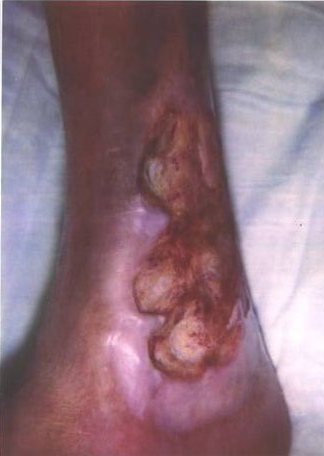
Venous ulcers are quite painful and limping is not uncommon in individuals. Venous ulcers are extremely difficult to treat. There is no immediate cure for venous ulcers. No matter what treatment is undertaken, time, patience, and motivation are required- plus a knowledgeable surgeon.
Venous Ulcers 101- part 3
Washing solution: The medical field is inundated with thousands of anti septic solutions. You do not need any of these. The more solutions you use, the greater is the probability that these chemicals will destroy your normal tissues and prevent healing. The best solution to clean an ulcer is warm water and a clean dressing. Why the consumer is so preoccupied with medical antiseptics and disinfectants is hard to understand. The majority of these solutions are best reserved for hospital use.
Occlusive dressings: Over the years, there have been many types of dressing developed to treat a venous ulcer. Both occlusion and on occlusive dressings are widely sold on the market. May of these dressing have exotic antibiotics and chemicals impregnated. Other dressings have growth factors. These dressing are expensive, and there is little evidence that they are better than a simple gauze and a compression bandage.
In some people, the ulcer does get small but fails to heal completely. The wound appear red and painful. Once the ulcer is small and is clean, then a skin graft can be done. However, before you go for this surgical procedure, it is vital that the pressure in the veins has been eliminated. Plastic surgeons often apply skin grafts on venous ulcers. However, it is vital that the varicose vein gets treated before the skin graft is applied. Skin grafts have a 100% failure rate when the venous pressure is not treated. This procedure is expensive, painful and requires anesthesia. - there are no refunds when it fails.
Growth factors are the IN- thing today. Almost all wound clinics apply these growth factors on wounds. Growth factors do work in a few cases but in most cases, they are just an expensive gimmick. You need to control your venous pressures before you can have any of these exotic treatments. Venous ulcers heal without any of these treatments if the venous pressure is eliminated. Growth factors are best limited to radiation induced ulcers or chronic bed sore ulcers.
Compression garments are the best treatment for a venous ulcer. Once pain has subsided and the ulcer is clean and dry, start to wear a compression stocking. This will help reduce pressure in the lower leg and slowly heal the ulcer. Compression stockings come in many sizes and you may need a large size because of the dressing. Wear the stocking every single day during daytime. Do not worry if the stockings get soaked with fluid from the wound. You can always wash your stockings. If you do this for a few months, your ulcer will start to heal and pain will decrease. Treatment with compression garments takes time, patience, and motivation.
Initially, you may find stockings hard to get used to and uncomfortable. Stocking may also need to be changed everyday. Nevertheless, if you do this, you will definitely get your ulcer to heal. There is no treatment out there that is better than a compression stocking for venous ulcers.
Final point
Please consumers do not go for all the fancy treatments available at wound clinics if you have a venous ulcer. You must control venous pressure first before your ulcer will heal. The best and most effective way to control your venous pressure is to wear compression stockings. Varicose veins can also be treated surgically if they are large and incompetence has been demonstrated by ultrasound. Once the venous pressure is controlled, your ulcer should heal within 6-12 months. Do not expect miracles, but if you remain, persistent and motivated, you will get the desired result.
Occlusive dressings: Over the years, there have been many types of dressing developed to treat a venous ulcer. Both occlusion and on occlusive dressings are widely sold on the market. May of these dressing have exotic antibiotics and chemicals impregnated. Other dressings have growth factors. These dressing are expensive, and there is little evidence that they are better than a simple gauze and a compression bandage.
In some people, the ulcer does get small but fails to heal completely. The wound appear red and painful. Once the ulcer is small and is clean, then a skin graft can be done. However, before you go for this surgical procedure, it is vital that the pressure in the veins has been eliminated. Plastic surgeons often apply skin grafts on venous ulcers. However, it is vital that the varicose vein gets treated before the skin graft is applied. Skin grafts have a 100% failure rate when the venous pressure is not treated. This procedure is expensive, painful and requires anesthesia. - there are no refunds when it fails.
Growth factors are the IN- thing today. Almost all wound clinics apply these growth factors on wounds. Growth factors do work in a few cases but in most cases, they are just an expensive gimmick. You need to control your venous pressures before you can have any of these exotic treatments. Venous ulcers heal without any of these treatments if the venous pressure is eliminated. Growth factors are best limited to radiation induced ulcers or chronic bed sore ulcers.
Compression garments are the best treatment for a venous ulcer. Once pain has subsided and the ulcer is clean and dry, start to wear a compression stocking. This will help reduce pressure in the lower leg and slowly heal the ulcer. Compression stockings come in many sizes and you may need a large size because of the dressing. Wear the stocking every single day during daytime. Do not worry if the stockings get soaked with fluid from the wound. You can always wash your stockings. If you do this for a few months, your ulcer will start to heal and pain will decrease. Treatment with compression garments takes time, patience, and motivation.
Initially, you may find stockings hard to get used to and uncomfortable. Stocking may also need to be changed everyday. Nevertheless, if you do this, you will definitely get your ulcer to heal. There is no treatment out there that is better than a compression stocking for venous ulcers.
Final point
Please consumers do not go for all the fancy treatments available at wound clinics if you have a venous ulcer. You must control venous pressure first before your ulcer will heal. The best and most effective way to control your venous pressure is to wear compression stockings. Varicose veins can also be treated surgically if they are large and incompetence has been demonstrated by ultrasound. Once the venous pressure is controlled, your ulcer should heal within 6-12 months. Do not expect miracles, but if you remain, persistent and motivated, you will get the desired result.
Venous Ulcers 101- part 2
Here are some bona fide treatments for a venous ulcer.
Leg elevation is a must. Whenever you sit down or lie in bed, elevate the leg. The longer you maintain leg elevation, the less will be the pressure inside the veins. Leg elevation reduces swelling, pain, and redness of ulcer. Of course, leg elevation alone will not cure the ulcer, but will help lessen symptoms. Leg elevation is not a one shot deal; it has to be done for months. Leg elevation is often combined with other treatments.
Varicose veins: The most common cause of venous ulcer is varicose veins. If the varicose vein is not treated than no matter what you do, this will not help. This is a major error by most physicians. One must treat varicose veins before the ulcer can heal. There are many methods to treat varicose veins (see prior writing). The pressure inside varicose veins is high and once this pressure is eliminated, venous ulcers will heal.
Wound care of a venous ulcer requires frequent cleaning and debridement. The wound cleaning can be done at home but once in a while one should get a decent vascular surgeon to look at the wound. The majority of wound clinics are not run by people who know a lot about varicose veins. There are thousands of products for wound care. There is no difference between any of them. These products also cost a fortune. For someone who has little money, rinse the leg in warm water. Apply a slightly moist gauze on the wound and then apply dry gauze on top of it. The principle is that the Wet to Dry gauze will peel of all debris when you remove it. Do not soak the gauze with a lot of water; it will macerate the wound and skin. Twice a day cleaning with water and gauze is better than anything that is sold by wound care clinics. However, always let a vascular surgeon look a the ulcer to ensure that it is healing and you are doing a good job.
Skin care must be meticulous. Do not apply soaking wet gauze on the ulcer as it will macerate skin and will not debride the wound. If the gauze is dry, it may stick to the ulcer surface and hurt like hell when you pull it off. Just a wee bit wet and then, dry gauze.
Antibiotics are often written by physicians for venous ulcers. Unless an ulcer is infected, antibiotics are not needed. An infected wound will have foul smelling drainage, extreme pain and one may even have a fever. The ulcer will look hot and beefy red. If you have a clean wound, antibiotics are a waste of money.
Leg elevation is a must. Whenever you sit down or lie in bed, elevate the leg. The longer you maintain leg elevation, the less will be the pressure inside the veins. Leg elevation reduces swelling, pain, and redness of ulcer. Of course, leg elevation alone will not cure the ulcer, but will help lessen symptoms. Leg elevation is not a one shot deal; it has to be done for months. Leg elevation is often combined with other treatments.
Varicose veins: The most common cause of venous ulcer is varicose veins. If the varicose vein is not treated than no matter what you do, this will not help. This is a major error by most physicians. One must treat varicose veins before the ulcer can heal. There are many methods to treat varicose veins (see prior writing). The pressure inside varicose veins is high and once this pressure is eliminated, venous ulcers will heal.

Wound care of a venous ulcer requires frequent cleaning and debridement. The wound cleaning can be done at home but once in a while one should get a decent vascular surgeon to look at the wound. The majority of wound clinics are not run by people who know a lot about varicose veins. There are thousands of products for wound care. There is no difference between any of them. These products also cost a fortune. For someone who has little money, rinse the leg in warm water. Apply a slightly moist gauze on the wound and then apply dry gauze on top of it. The principle is that the Wet to Dry gauze will peel of all debris when you remove it. Do not soak the gauze with a lot of water; it will macerate the wound and skin. Twice a day cleaning with water and gauze is better than anything that is sold by wound care clinics. However, always let a vascular surgeon look a the ulcer to ensure that it is healing and you are doing a good job.
Skin care must be meticulous. Do not apply soaking wet gauze on the ulcer as it will macerate skin and will not debride the wound. If the gauze is dry, it may stick to the ulcer surface and hurt like hell when you pull it off. Just a wee bit wet and then, dry gauze.
Antibiotics are often written by physicians for venous ulcers. Unless an ulcer is infected, antibiotics are not needed. An infected wound will have foul smelling drainage, extreme pain and one may even have a fever. The ulcer will look hot and beefy red. If you have a clean wound, antibiotics are a waste of money.
Venous Ulcers 101
How does one treat Venous Stasis Ulcers?
The majority of physicians know little about how to treat a venous ulcer. Venous ulcers results from long standing varicose veins. The high pressure in superficial veins of legs causes blood to leak out into the tissues. The initial change is skin discoloration that is obvious around the ankles. The skin appears dark and is very unsightly. If treatment is not undertaken at this stage, a venous ulcer is a likely outcome. Except for a few vascular surgeons, most health care workers are not familiar with management of these difficult ulcers.
Venous ulcers once developed are very difficult to cure. They require patience and dedication on part of the patient and technical expertise on part of the physician. Simply prescribing antibiotics does not cure a venous ulcer.
One of the chief reasons why these venous ulcers have been difficult to treat is because health care workers have relied on traditional treatment approaches. Hundreds of treatments have been developed over the years for venous ulcers and the majority can be flushed down the toilet. The most important point when it comes to treatment of venous ulcers is to reduce venous pressure. If venous pressure is not decreased- no treatment will work
The majority of physicians know little about how to treat a venous ulcer. Venous ulcers results from long standing varicose veins. The high pressure in superficial veins of legs causes blood to leak out into the tissues. The initial change is skin discoloration that is obvious around the ankles. The skin appears dark and is very unsightly. If treatment is not undertaken at this stage, a venous ulcer is a likely outcome. Except for a few vascular surgeons, most health care workers are not familiar with management of these difficult ulcers.


Venous ulcers once developed are very difficult to cure. They require patience and dedication on part of the patient and technical expertise on part of the physician. Simply prescribing antibiotics does not cure a venous ulcer.
One of the chief reasons why these venous ulcers have been difficult to treat is because health care workers have relied on traditional treatment approaches. Hundreds of treatments have been developed over the years for venous ulcers and the majority can be flushed down the toilet. The most important point when it comes to treatment of venous ulcers is to reduce venous pressure. If venous pressure is not decreased- no treatment will work
Subscribe to:
Posts (Atom)